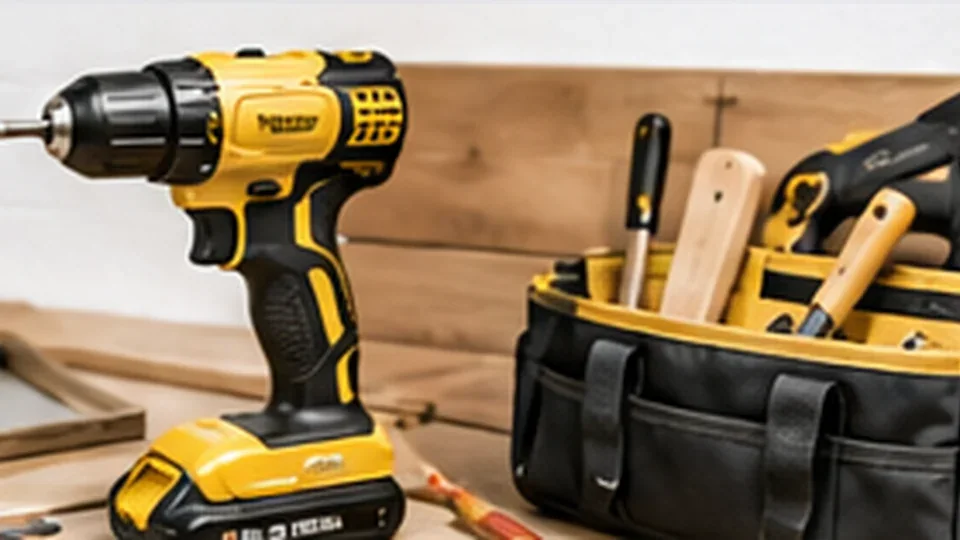
Define the work before comparing specifications
Write the tasks you expect: assembling furniture, drilling small holes in wood, fastening into framing, occasional masonry with the appropriate tool/bit, or repeated larger holes. Light household fastening does not require the same size or power as construction work. A compact drill you actually control can be more useful than a heavy model whose extra capacity you rarely need.
Chuck size is a capacity decision
The chuck determines which shank sizes it can accept and indirectly signals the class of tool. Larger capacity can be useful for bigger bits, but it often comes with more weight. Check the bits/accessories you realistically plan to use rather than buying the largest chuck because it sounds more professional.
Torque numbers are hard to compare across brands
Marketing torque figures can be measured differently and do not describe balance, clutch behavior, speed control or how the tool feels in a tight cabinet. Use torque as one data point, not a ranking system. For precision fastening, a controllable trigger and useful clutch range may matter more than the highest headline number.
Battery capacity changes runtime and weight
A higher amp-hour battery generally stores more energy within the same voltage family, but it is also often larger and heavier. A small battery can make a drill pleasant for overhead or cabinet work, while a larger pack is useful for longer sessions. Owning one compact pack and one higher-capacity pack can be more flexible than making every tool carry the largest battery.
Build a five-year platform estimate
| Cost line | Platform A | Platform B |
|---|---|---|
| Drill kit today | 120 | 155 |
| Second battery in year 1 | 45 | 60 |
| Bare-tool light in year 2 | 35 | 45 |
| Bare-tool driver in year 3 | 70 | 75 |
| Replacement battery allowance | 45 | 60 |
| Example five-year cash total | 315 | 395 |
The example numbers are illustrative. Replace them with current local prices. The method shows why comparing only two drill kits can hide the cost of the platform you are actually choosing.
Check the ecosystem without imagining future tools you will never buy
A platform with 200 tools is not automatically more valuable than one with 30. Highlight the next three tools you genuinely might need. Compare their bare-tool prices and whether they share the same battery generation. If the ecosystem’s strongest products are unrelated to your projects, the large catalog adds little value.
Example: the “cheap kit” that becomes expensive
A discounted drill includes one small battery and charger. Six months later you want a compatible work light, but bare-tool prices are high and batteries are difficult to find locally. A slightly more expensive initial kit from a widely stocked platform could have produced a lower total cost. Availability is part of platform value.
Ergonomics are a specification you can test
If possible, hold the drill with the battery size you plan to use. Check trigger reach, grip diameter, balance and whether the forward/reverse switch is easy to operate without accidental presses. For overhead work, a small difference in weight becomes noticeable quickly.
Brushless vs brushed: match the premium to use
Brushless motors can improve efficiency, size and maintenance characteristics, but a light-duty homeowner may not recover a large price premium through runtime alone. Compare the complete tool—weight, warranty, control, battery compatibility and price—rather than treating one motor type as mandatory.
Buying checklist
- List the five most common drilling/fastening tasks
- Check required bit shank sizes
- Choose a comfortable tool size
- Compare trigger and clutch control
- Price a second battery now
- Price the next two likely bare tools
- Check local battery availability
- Understand warranty/repair support
- Calculate five-year platform cash cost
- Buy hearing/eye/dust protection appropriate to the work, not as an afterthought
Price the platform as a small system, not a starter kit
Write down the drill/driver, the battery sizes you would realistically use, one replacement battery, the charger and only the next one or two tools you genuinely expect to add. Compare that basket across platforms. This prevents a heavily discounted starter kit from hiding expensive batteries or bare tools that matter later.
Also record local availability. A platform may look inexpensive online but become inconvenient if replacement batteries, service or compatible tools are difficult to obtain where you live. Five-year cost is partly money and partly the friction of keeping the system usable.
Frequently asked questions
Do I need an impact driver too?
Not automatically. A drill/driver covers many household tasks. Add an impact driver when repeated fastening or specific projects make its characteristics useful.
Is a higher voltage always better?
No. Higher-voltage systems often provide more capacity but can increase size and weight. Match the system to the work.
How many batteries should I own?
For occasional use, two can be convenient so one can charge while the other works. The best number depends on runtime, charge speed and how many tools share the platform.